By Jack ZimmermanDo you want to know a secret? No, I’m not talking about the Beatles’ song of the same name. I’m talking about a real, honest-to-goodness, bona fide secret. Ready? Okay, here goes: Yeshua’s existence did not begin in Matthew. Shocked? You shouldn’t be. In fact, He’s from the first word of the first chapter of the first book of Scripture, to the last word of the last chapter of the last book. And there is, perhaps, no better season to take note of that than right now. As we journey through the annual biblical festival cycle, we’re reminded of some wonderful parallels between the Old and New Testaments, and in particular, those of Passover and the Day of Atonement, or Yom Kippur. Thanks not so much to the Bible but more so to Cecil B. DeMille, millions will continue to attribute the story of the Israelites' exodus from Egypt to none other than that great biblical figure Charlton Heston, who (aided by God Himself, who played the starring role) parted the Sea of Reeds as Israel crossed over on dry ground. It was, however, a fact that their redemption came because an innocent, spotless, and blameless lamb was slain, and its blood smeared on the lintels and doorposts of Israelite homes. In the tenth and final plague God brought upon Egypt, this one act spared the Israelites from death. And that should come as no surprise, considering that Leviticus 17:11 tells us that the life of the flesh is in the blood, and that it is the blood that atones for the soul. And it shouldn’t go without notice that when you smear blood on a lintel and a doorpost, somewhere along the way, you’re making the shape of a cross, upon which another lamb, this time the Lamb of God who takes away the sin of the World, gave His own life for us on a similar Passover day nearly 2,000 years later. So, Passover is not simply a festival that recognizes that no matter what you do with it, matzah still tastes like cardboard—it is much more than that—it is a reminder that blood shed from a sacrifice spares our very lives and gives us the promise of redemption. When you come to understand that, you never read Psalm 22 the same way again. A well-known Messianic prophecy, the Psalm describes the act of a crucifixion in marked detail, at a time when crucifixion would be non-existent for another 900 years. Of particular note are verses 14-18: “I am poured out like water, and all my bones are out of joint. My heart has turned to wax; it has melted within me. My mouth is dried up like a potsherd, and my tongue sticks to the roof of my mouth; you lay me in the dust of death. Dogs surround me, a pack of villains encircles me; they pierce my hands and my feet. All my bones are on display; people stare and gloat over me. They divide my clothes among them and cast lots for my garment.” His blood shed on that executioner’s stake is just the first part of the redemption story. The idea of blood atonement goes further, connecting this spring feast of Passover (which has been fulfilled) to the fall feast of Yom Kippur, which has yet to be fulfilled. The imagery of Yom Kippur is quite similar—in ancient times, blood was required from a sacrifice as the vehicle to lead one to redemption from sin. And just as Yeshua was the fulfillment of the lamb’s blood leading to Israelite redemption at the first Passover, He too is the fulfillment of the blood of sacrificial animals, and is the only way possible for us to be redeemed and spared eternal death today. And the prophetic timeline couldn’t be clearer: In Zechariah 12:10 we’re told, “They shall look on me, the one they have pierced, and they will mourn for him as one mourns for an only child, and grieve bitterly for him as one grieves for a firstborn son.” I mentioned earlier that Yom Kippur has yet to be fulfilled. It will be an exciting event to look forward to, because it will mark Yeshua’s return, and with that, the fulfillment as well of His words in Matthew 23:39, “For I tell you, you will not see me again until you say, ‘Blessed is he who comes in the name of the Lord.’” And on that great day, friends, eyes will be opened, and the knowledge of where one’s true atonement comes will be revealed.
Jack Zimmerman is a staff evangelist at Jewish Voice, and an ordained Messianic Jewish rabbi.



Scriptures show us that God set apart the Jewish people

Discover the power of confessing God's Word in Hebrew. Jewish Voice Ministries announces volume 6 of Jonathan Bernis' series: El Shaddai – The God Almighty.

Prayers and blessings are fundamental to Jewish worship, and therefore to worship in Messianic Judaism as well. The Siddur (SID-dur), the Jewish prayer book, contains prayers and blessings used as liturgy in daily and special services at synagogue.
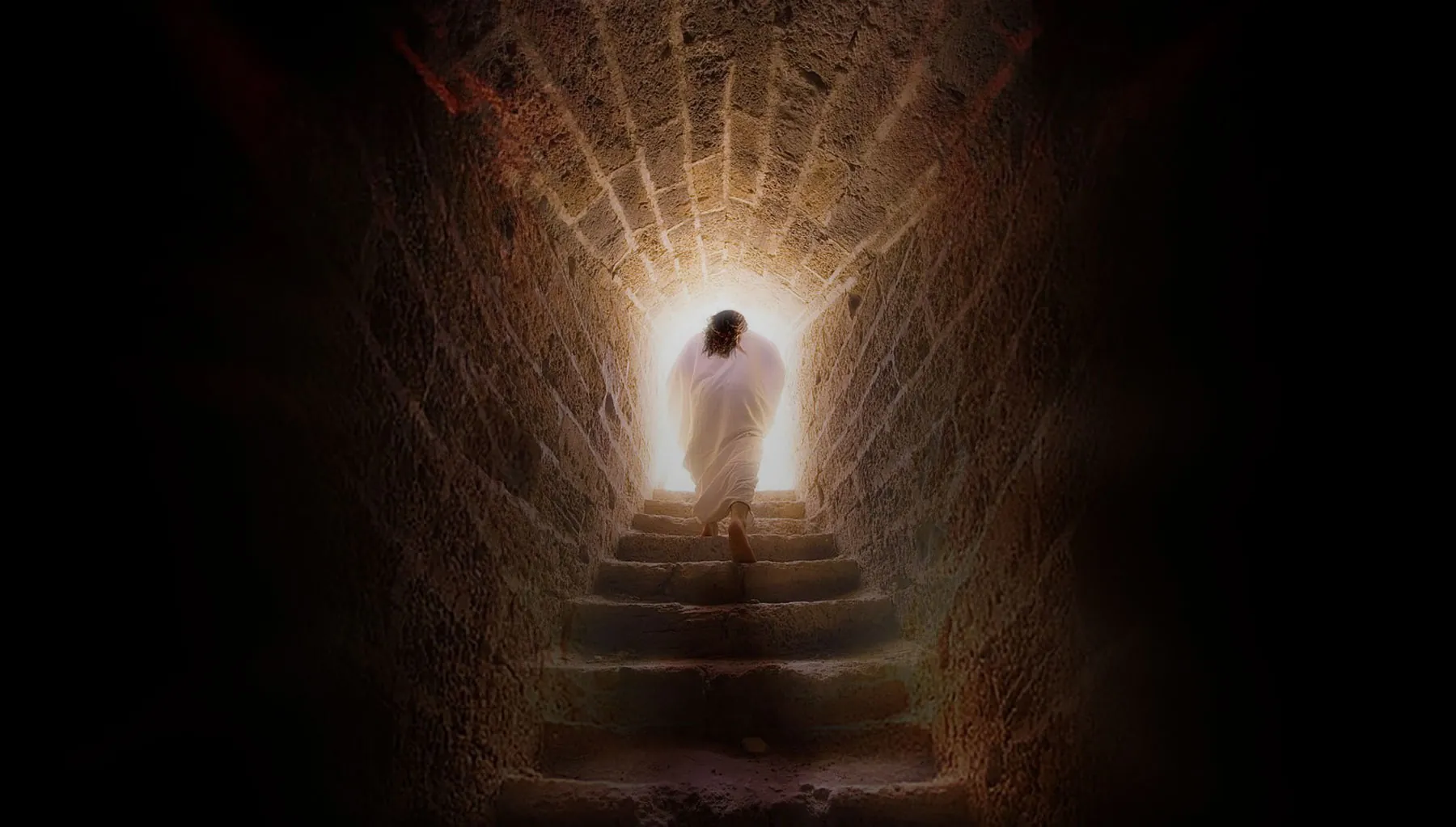
Yeshua HaMashiach (Yeh-SHOO-ah Ha-Mah-SHEE-akh) is Hebrew for “Jesus the Messiah ” Yeshua is a shortened version of the name Yehoshua (Yeh-HO-shoo-ah), which means “Adonai saves ” Mashiach is the Hebrew word for Messiah and means “anointed one