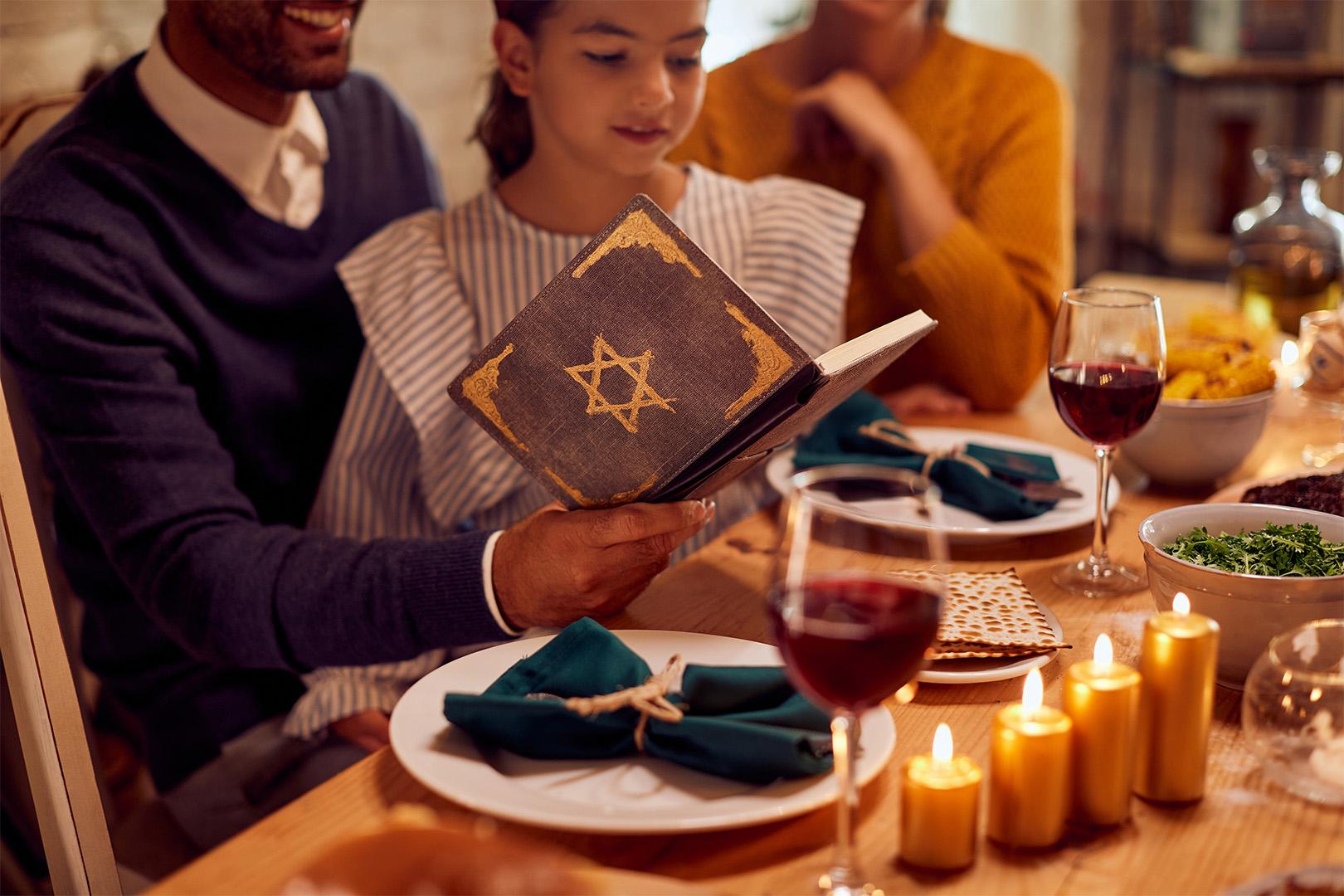
Passover is one of the most important holy days of the Jewish year. It’s a holiday to travel home for, with generations of family and guests gathering for a traditional meal called a Seder. During the Seder, we use specific elements to recount God’s dramatic deliverance of our ancestors from enslavement in Egypt, following Scripture’s command to pass this vital history on throughout all our generations.
Here are six key reasons why Passover is so important.
1. God Delivered the Jewish People from 400 Years of Slavery
Four hundred years before the Passover, God saved the descendants of Abraham from a deadly famine by bringing them to Egypt, the only nation prepared with storehouses of food. By God’s sovereignty, Joseph, one of Israel’s 12 sons who was sold as a slave by his brothers, had risen to second in command over Egypt. When the Israelites faced starvation, Pharaoh welcomed them to Egypt because of Joseph. But after Pharaoh died, his successor put the Jewish people to work as slaves. They lived in bondage until God called Moses as His instrument to deliver them 400 years later – at Passover. “If God had not delivered us,” the Passover Seder says, “we would still be slaves.”
2. God Showed His Power Through the Miracles Surrounding Passover
Pharaoh recoiled at the idea of letting the enslaved Hebrews leave Egypt. If they departed, he would lose an enormous – and free – labor force. He refused to let them go and, in so doing, opened the door for God to reveal His power to all of Egypt. After each of Pharaoh’s obstinate denials, God brought a supernatural plague upon the nation of Egypt. From locusts to frogs, from boils to water-turned-to-blood, God displayed His power throughout the whole land of Egypt.
All who endured the plagues recognized that the God of Israel was mighty and determined to liberate His people. Israel, too, observed the God of their fathers intervene to rescue them. The miracles continued after their departure. When Pharaoh’s armies pursued, the Israelites walked on dry ground right through the middle of the Red Sea as the waters created a high wall on either side of them. Through the Passover and Exodus, the God of Israel was manifested and glorified for all to see.
3. God Reaffirmed His Covenant with Abraham, Isaac, and Jacob
For generations, slavery was all the Jewish people knew. They were born into bondage and died in bondage. When God stepped in to liberate them as a people, He made it clear that He had not forgotten them. The God of Israel was faithful to keep His covenant with their father, Abraham. He would not forsake His promise. God’s intervention to free the descendants of Abraham showed them that they were still His people, and He was still their God. He raised them up from a subjugated people and reminded them that He called the Jewish people to specific purposes and an everlasting covenant.
4. God Called the Jewish People Out to Give Them a Land of Their Own
Our ancestors didn’t know where they were going, but they knew their God had set them free. He had promised to give them “a good and large land” in which to dwell as a nation (Exodus 3:8 TLV). No longer would they serve Pharaoh. They would live in the Land given to them directly by God. Israel was on her way to a homeland of her own. The impact of that land grant reverberates through the centuries, standing strong and true despite various exiles and dissenting opinions, even today. Passover opened the door to receiving the Promised Land.
5. God Established a Watershed for the Jewish People and an Inheritance of Faith to Pass On
Passover is known as the watershed event in Jewish history. It was a turning point, a defining moment for the Jewish people. Everything changed for us with Passover. God rescued, preserved, and called us out to be His people in our own land. Immediately upon our ancestors’ departure from Egypt, He instituted the Feast of Passover as an everlasting memorial to the astounding feat of our deliverance. God set an annual appointment for Israel to intentionally remember what He had done for us in the Passover and Exodus. Thousands of years later, we commemorate this and tell our children, passing on a legacy of faith in the one true God, just as He commanded us.
6. God Revealed a Prophetic Glimpse of the Promised Messiah’s Sacrificial Death
By God’s sovereign design, the Feasts of Israel established in Leviticus 23 contain a prophetic shadow of God’s redemptive plan for mankind. Within Passover is the picture of the Messiah’s death to deliver us from the bondage of sin.
The final plague in Egypt was that the firstborn of all households would die. God revealed to the descendants of Abraham the one way they would be spared: They were to sacrifice an unblemished lamb and brush its blood on the doorframes of their homes. Only then would the Angel of Death pass over their homes and spare their firstborn.
First Corinthians 5:7 (TLV) tells us that “Messiah, our Passover Lamb, has been sacrificed.” Yeshua’s (Jesus’) blood, shed on Passover, covers our sin as the lamb’s blood covered the doorframes of Israelite homes in Egypt. As the lamb’s sacrificial death saved the Children of Israel from physical death, Yeshua’s sacrificial death on our behalf – when received in faith – delivers us from the bondage of sin and eternal death.
The Importance of Passover
Every Passover, Jewish families come together to remember and teach the next generation about the pivotal event that delivered us as God’s people. When Messianic Jews observe Passover, we also celebrate Yeshua and pass down to our children the magnificent connection God designed into Passover, which reveals the eternal deliverance He provided as God’s promised Messiah.
Passover is a holiday of utmost importance to Jewish people. It is also relevant to non-Jewish Believers because it reveals that the Bible – from Genesis to Revelation – is one continuous account of God’s relationship with mankind and His redemptive plan. Jesus is in Passover, and all who believe in Him for eternal life can celebrate its significance and find Him within it.